
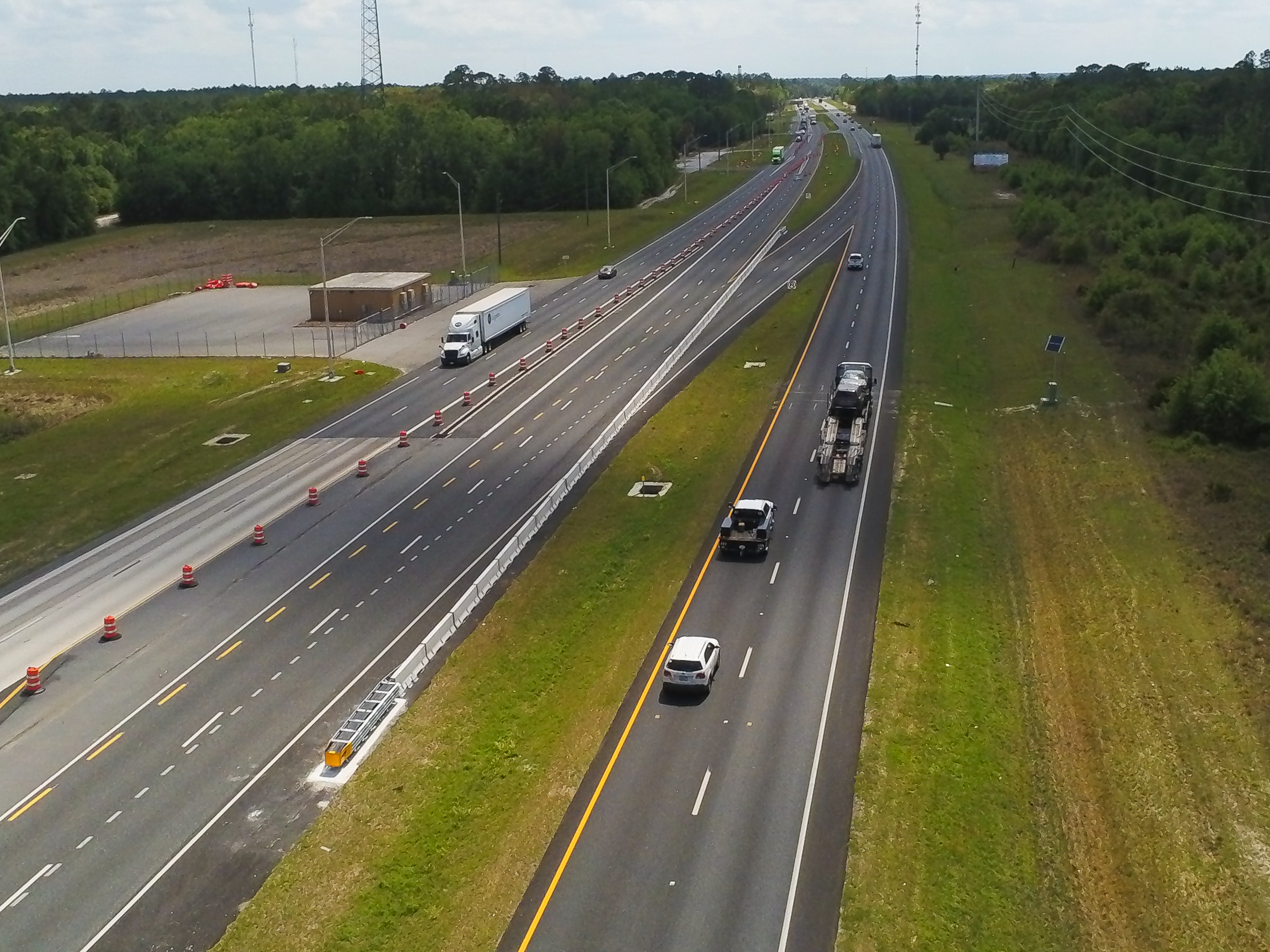
The U.S. 301 Concrete and Asphalt Test Road Facilities project addressed the need for more durable and cost-effective pavement designs for Florida communities. Traditional pavement design methods often do not account for real-world traffic conditions, so by collecting and analyzing recycled material data from such full-scale, controlled roadway experiments, the Florida Department of Transportation can refine design procedures, improve safety, and enhance durability on state roadways. Costing $6 million, the testing facility project uses advanced sensors underneath the road, which transmit data through the project’s fiber communication network to Florida DOT’s State Materials Office for analysis. This approach allows the agency to analyze and improve pavement designs, construction specifications, and maintenance protocols based on actual performance data. An additional benefit of this project is that the Florida DOT can easily test or change out test sections in the future due to the benefit of having the bi-directional reserve roadway between the test tracks. Additionally, the use of recycled materials, such as reclaimed asphalt pavement, highlights the team’s cost-effective approach, positioning the project as a pioneering effort in the development of Florida’s renowned roadways.
 America's Transportation Awards