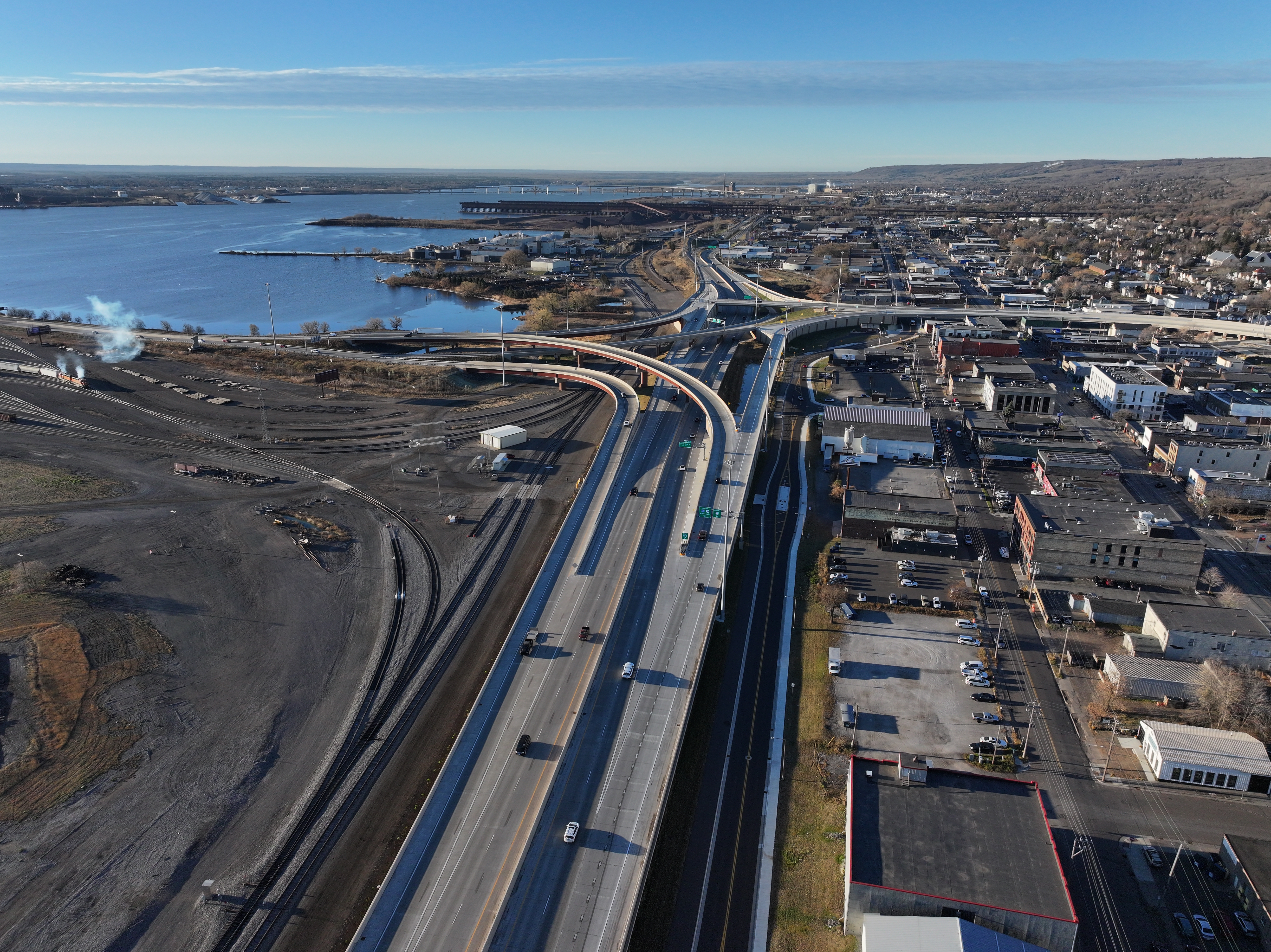
Minnesota Department of Transportation’s Twin Ports Interchange Project improved safety and freight mobility at an interchange that once had the fourth-highest crash rate in the state, driven by left exits and blind merges. Poor geometry, along with load-posted and non-redundant bridges, also limited efficient movement of oversize/overweight (OSOW) freight to and from the Port of Duluth.
The project shifted OSOW traffic away from city and county streets, reducing congestion, minimizing roadway damage, and saving haulers hours in transportation costs. Several bridges were replaced with traditional roadways using ground improvement strategies, enhancing safety while lowering life-cycle costs.
Designed with a minimum 75-year service life, the new $435 million interchange also benefits railroad operations by better separating the railyard from I-35 and allowing room for future expansion. MnDOT noted that funding from the Infrastructure Investment and Jobs Act helped advance portions of the project into construction.